Introducing Nestling Nannies
- shetland77
- 13 hours ago
- 3 min read
We are exceptionally proud that our animal release rate, at 74%, is way above the UK national average of 42.6%. We've put a lot of hard work and care into making this happen and we want it to stay that way. So that's why planning for Spring is so very important. It's the time when we see our biggest surge in admissions - orphaned babies of all species and all ages. They are at their most vulnerable when they come to us and need very special care. So that's why, this year, we are trialling Nestling Nannies.
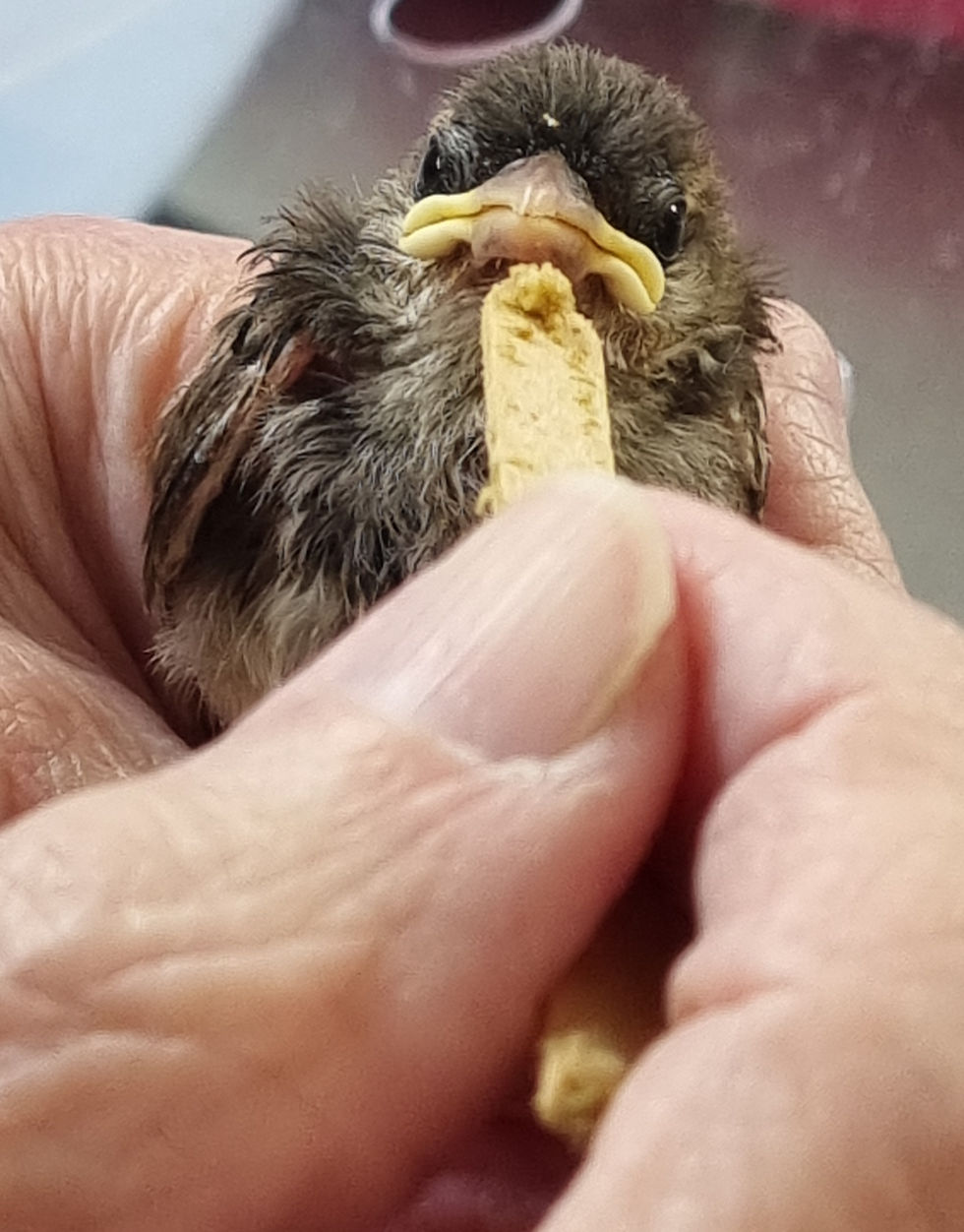
"Last year we saw a huge rise in admissions of birds," says Penny Hunt, Rescue Co-Founder. "This included a 508% increase in garden birds, most of which came to the Rescue as fledglings. So we have to be ready for whatever this year brings."
Nestling Nannies are subgroups of Rescue volunteers who will specialise in the feeding and ongoing care of certain types of birds, caring for the birds in their homes. "We want to better understand the needs of our patients so we can continue to improve our bird care," adds Penny. "Our Nestling Nannies will each specialise in a different type of bird - garden birds, swallows and martins, corvids, pigeons, waterfowl, owls and raptors. The trial will enable us to not only learn more about the birds' individual needs but, as the nestlings will be cared for in volunteers' homes, it will also increase our ability to better deal with more orphaned babies."
"Our ethics and care standards are at the heart of everything we do," adds Jane Carpenter, Rescue Co-Founder, "so each Nestling Nanny will operate to strict guidelines, drawing on the very best of our experience to date. We want to say a very big thank you to all those volunteers who have stepped forward and offered to help from home with the huge amount of nestlings and fledglings we expect. Handfeeding round the clock, never mind the emotional aspect of this, is a huge commitment but, if we are to return these birds to the wild, we know we need to do as much as we can."

Of course, spring is not just about winged babies. Some equally challenging charges will be waiting in the wings not long after the birds arrive - the hedgehogs. They usually give birth to four or five young in June and July. If the mother is disturbed, she is likely to desert her babies. Or sometimes mothers are injured or killed and the orphans are left on their own, usually to die. If they are lucky, and someone hears their cries, they may find their way to us. Last year, at 'hog peak' we had 120 hedgehogs, so we also need to start planning for the likelihood that those figures will increase!
Spring is the time when everything comes alive. We love this season but it can be an enormous challenge for us. Unfortunately, this huge spring spike in admissions also comes with a huge spike in costs. We appreciate every single donation and we make every penny count. If you would like to find out how to support our vital work, please click here.




Comments